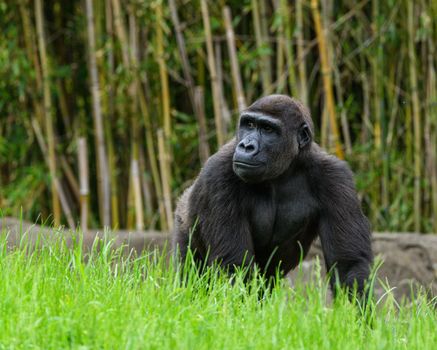
I'll be honest: when I heard they were making another Planet of the Apes movie, my first thought was 'Do we really need this?' The original trilogy with Andy Serkis as Caesar was so good—a rare example of a reboot trilogy that actually got better with each film. 'War for the Planet of the Apes' ended on such a perfect, bittersweet note. Caesar's journey was complete. So when the trailer for 'Kingdom of the Planet of the Apes' dropped, I was skeptical. But then I saw it opening weekend, and I walked out of the theater genuinely surprised. This isn't a cash grab. This is a filmmaker who understood the assignment and delivered something that feels fresh, thoughtful, and, dare I say, relevant.
The Setup: Generations Later, A New World
The movie is set about 300 years after the events of 'War.' Caesar's legacy is now legend, but it's also been twisted. The apes have formed their own societies, some noble, some not so much. The humans have regressed even further—they can barely speak and live in scattered, feral groups. The story follows Noa, a young chimpanzee from an eagle-clan (yes, they have eagle-clans now, and it's awesome), whose village is attacked by a tyrannical ape king named Proximus Caesar. Proximus claims to be following Caesar's teachings but has twisted them into a doctrine of conquest. Noa must start a journey to save his family and, in the process, discovers the truth about the past.
What I loved about this setup is that it doesn't just re-tread the same ground as the old movies. It explores a new idea: what happens to a revolutionary's message after they're gone? How do later generations interpret—and misinterpret—the words of a leader? It's a theme that resonates far beyond a movie about talking apes.
The Visuals: Worth Every Penny of IMAX
Let's get the obvious out of the way: the visual effects are mind-blowing. Weta Digital has outdone itself. The apes look unbelievably real. The fur, the eyes, the way they move—it's photorealistic. I forgot I was watching CGI for most of the runtime. The world design is also incredible. The overgrown ruins of human civilization are haunting. There's a sequence where Noa finds a sunken submarine, and the way nature has reclaimed it is breathtaking. The eagle-clan's village, built into the cliffs, is one of the most imaginative sets I've seen in years. This is a movie that demands to be seen on the biggest screen you can find.
The Performances: The Real Soul of the Film
Owen Teague plays Noa, and he's fantastic. He brings a vulnerability and a quiet strength to the role. You feel his fear, his determination, his grief. The motion capture performance is so subtle that you forget you're watching a digital character. Freya Allan plays Nova, a human who tags along on the journey. She's a breath of fresh air—her character is smart, resourceful, and surprisingly funny. But the standout for me is Kevin Durand as Proximus Caesar. He's menacing, charismatic, and genuinely scary. He delivers a speech about the power of fear that gave me chills. He's not a cartoon villain; he's a true believer in his own twisted logic.