🍽️ Food

Why Everyone Is Suddenly Obsessed with Sri Lankan Food (and Where to Find the Real Stuff)

Why Everyone Is Suddenly Obsessed with Sri Lankan Food (and Where to Find the Real Stuff)

I first noticed it when my Instagram feed started filling up with golden hoppers — those bowl-shaped, crispy-edged pancakes made from fermented rice flour. Then came the posts about 'kottu roti,' the chopped flatbread dish that looks like chaos but tastes like heaven. And then, on May 28, 2026, the Michelin Guide announced that a restaurant called 'Hoppers' in London's Soho had earned a star for its Sri Lankan cuisine. That was the moment the food world officially took notice. I've always loved Sri Lankan food — the heat, the coconut, the deep layers of spice — but it's been overshadowed by its neighbors: Indian, Thai, and Vietnamese cuisines. Not anymore. I flew to Colombo last week to eat my way through the island and understand why this cuisine is finally having its moment. Here's what I found.

The Flavors That Make Sri Lankan Food Unique

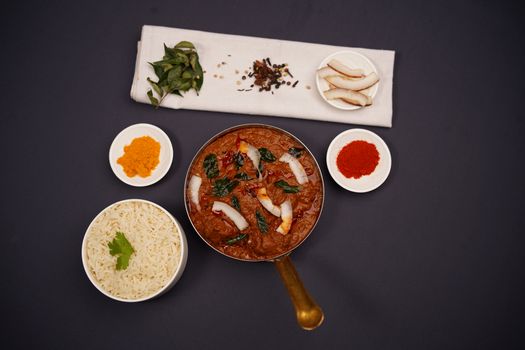
If you've only had 'curry' from a generic takeout menu, you haven't had Sri Lankan curry. The difference is the spice blend. Sri Lankan cooking uses 'roasted curry powder' — a mix of coriander, cumin, fennel, cinnamon, cardamom, cloves, and black pepper, all toasted until fragrant. It's darker, smokier, and more complex than Indian garam masala. And then there's the coconut. Everything is cooked in coconut milk or topped with fresh grated coconut. The result is a cuisine that's simultaneously fiery and creamy. At a restaurant called 'Ministry of Crab' in Colombo, I had the 'Jumbo Crab Curry' — a massive crab cooked in a sauce of coconut milk, curry leaves, and a secret blend of spices that the chef, Dharshan Munidasa, told me includes 'a little bit of everything but the kitchen sink.' It was the best crab I've ever eaten. The meat was sweet, the sauce was addictive, and I ended up sopping up every drop with pieces of 'parippu' (lentil) roti. I asked Munidasa why Sri Lankan food hasn't had its global moment yet. He said: 'Because nobody marketed it. But the food speaks for itself.'

The Dish That Changed My Mind: Hoppers

I'd had hoppers before, but never the real thing. In Colombo, I went to a tiny place called 'Palmyra' in the Pettah district, where a woman named Nalini has been making hoppers for 40 years. Her technique is mesmerizing: she swirls a ladle of fermented rice batter in a small wok, tilts it so the batter coats the sides, and then covers it to steam. The result is a bowl-shaped pancake with a soft, spongy center and a crispy, lacy edge. She served it with a bowl of 'lunu miris' — a spicy onion and chili sambol — and a coconut sambol made with dried Maldive fish. I cracked a soft-boiled egg into the center of the hopper, folded it, and took a bite. The combination of textures and flavors — the crunch, the softness, the heat, the umami — was revelatory. I ate four. Nalini laughed and said, 'You eat like a Sri Lankan.' I took that as the highest compliment.

Kottu Roti: The Street Food That's Having a Moment

If hoppers are the elegant side of Sri Lankan food, kottu roti is the rowdy, chaotic party. It starts with 'Godamba roti' — a thin, flaky flatbread that's chopped into strips on a griddle with a rhythmic clanging sound that's become synonymous with street food stalls across the country. The roti is mixed with vegetables, egg, meat (chicken, beef, or mutton), and a curry sauce, all chopped together with two metal spatulas. The sound is memorable — chef Sanjay Rao, who runs a pop-up in Brooklyn, told me he imported the spatulas from Sri Lanka just to get the authentic 'clang.' I had kottu roti at a stall called 'Kottu King' in Colombo, and it was a mess in the best way. The roti was slightly chewy, the vegetables still had crunch, and the curry sauce tied everything together. It's the kind of dish you eat with your hands, hunched over a plastic table, grinning. And it's cheap — about $3 for a massive portion.

The Spice Route: Why This Cuisine Is Perfect for Modern Palates

I think the reason Sri Lankan food is taking off now is twofold. First, people are tired of predictable flavors. The global palate has evolved — we want complexity, heat, and authenticity. Sri Lankan food delivers all three. Second, it's naturally suited for health-conscious eaters. It's mostly gluten-free (rice and coconut are staples), packed with vegetables, and uses fresh spices that are anti-inflammatory. A study from the University of Ruhuna, published in March 2026, found that the traditional Sri Lankan diet is associated with lower rates of obesity and diabetes compared to the Westernized diet. That's a selling point. But honestly, I don't think people need a health reason to eat this food. They need a taste. And once they have it, they're hooked.

Where to Find the Real Stuff (Outside Sri Lanka)

You don't have to fly to Colombo to eat well. London has become a hub — 'Hoppers' in Soho is the star, but 'Kottu House' in Brixton and 'Coconut Grove' in King's Cross are also excellent. In New York, 'Sigiri' in the East Village and 'Lanka' in Brooklyn are doing authentic work. Los Angeles has 'Sinhala' in Little Tokyo. And if you're in Melbourne, 'Ceylon Curry' in Fitzroy is a hidden gem. But here's my advice: look for the small, family-run places. The ones where the owner's grandmother is in the kitchen. That's where the real magic is. A chain restaurant can replicate the spices, but it can't replicate the love. And Sri Lankan food, more than any other cuisine I've tried, tastes like love. It's the warmth of a family kitchen, the patience of slow-cooked curries, the generosity of someone who wants you to leave full and happy. If you haven't tried it yet, find a spot this week. Order a hopper. Eat with your hands. Thank me later.

TR
Daniel Wilson

We spend hours researching and testing before we write anything. If something changes, we update the article. About our process →