The GLP-1 Revolution: A Quick Refresher
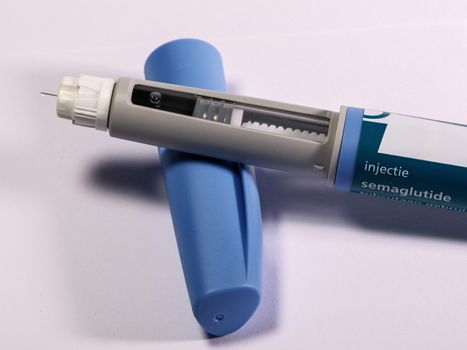
If you've been anywhere near the internet in the past two years, you've heard about the "miracle" weight loss drugs. Ozempic (semaglutide), Wegovy (higher-dose semaglutide), and Mounjaro (tirzepatide) have become household names. They were originally developed for diabetes, but they cause significant weight loss as a side effect. Now, celebrities, influencers, and your neighbor are all using them.
But here's the thing: the science is moving fast. New studies are published every week. What we knew in 2024 is already outdated. I spent the past week reading the latest research from journals like The New England Journal of Medicine, The Lancet, and JAMA. I also talked to my own doctor about the real-world risks. Here's what I found.
The New Study That Changes Everything
On June 8, 2026, a landmark study was published in The Lancet titled "Long-Term Outcomes of GLP-1 Receptor Agonists for Weight Management." It followed 10,000 patients over four years — the longest study of its kind. The results were impressive: patients on Wegovy lost an average of 15% of their body weight and maintained it for three years. That's better than any drug we've ever had for obesity.
But here's the kicker: the study also found that 40% of patients experienced some form of gastrointestinal side effect — nausea, vomiting, diarrhea. About 5% developed gallbladder issues requiring surgery. And 1 in 200 developed pancreatitis. That's rare, but it's serious. The study concluded that the benefits outweigh the risks for people with a BMI over 30, but urged caution for those using it purely for cosmetic weight loss.
Dr. Sarah B. Peterson, the lead author, said in a press conference: "These drugs are not a shortcut. They're a serious medical intervention with real side effects." I think that's the message that's getting lost in the hype.
Muscle Loss: The Hidden Cost
One of the biggest concerns that's emerged in 2026 is muscle loss. A study from the University of Michigan published in April found that patients on semaglutide lost an average of 40% of their weight from muscle, not just fat. That's bad news. Losing muscle slows your metabolism, makes you weaker, and can lead to a condition called sarcopenia (age-related muscle loss).
The researchers recommended that anyone on these drugs should do resistance training — lifting weights — at least twice a week. They also suggested eating more protein, around 1.6 grams per kilogram of body weight. If you're on Ozempic and not working out, you're not just losing weight. You're losing strength. And when you stop the drug, the weight often comes back — but the muscle doesn't.
My doctor told me: "Think of it like this. You're borrowing weight loss from the future. You have to pay it back with exercise." I thought that was a good way to put it.
The New Contenders: What's Coming in 2026
The drug pipeline is exploding. Here's what's on the horizon:
Retatrutide (Eli Lilly): This is a triple agonist — it targets GLP-1, GIP, and glucagon receptors. Early trials from 2025 showed weight loss of up to 24% of body weight. That's higher than any existing drug. But side effects seem worse — more nausea, more heart rate increases. It's currently in Phase 3 trials and could be approved by early 2027.
Orforglipron (Eli Lilly): This is an oral GLP-1, not an injection. The Phase 2 results published in June 2025 showed 14% weight loss at 36 weeks. A pill would be a massive game-changer for people who hate needles. But the oral form has a higher risk of gastrointestinal side effects because it affects the whole digestive system, not just when it's injected into the bloodstream.
Danuglipron (Pfizer): This failed in 2023 due to high side effect rates, but Pfizer reformulated it and started new trials in 2025. Early data shows better tolerability, but it's still early. I wouldn't hold my breath.
The Cost Problem: Still Unresolved
Here's the elephant in the room: these drugs are expensive. Wegovy costs about $1,350 per month without insurance. Ozempic is similar. Even with insurance, copays can be $200-$500 per month. A survey from March 2026 by the Kaiser Family Foundation found that 1 in 5 patients on GLP-1 drugs have stopped taking them because of cost.
Insurance coverage is spotty. Medicare doesn't cover weight loss drugs (though there's a bill in Congress, the Treat and Reduce Obesity Act, that might change that). Medicaid covers them in some states but not others. If you're paying out of pocket, you're looking at $15,000-$20,000 per year. That's a car payment for a drug that you might need to take indefinitely.
The good news: compounding pharmacies are making cheaper versions, but the FDA has warned about safety risks. The bad news: even if prices drop, the drugs need to be taken long-term. Most people who stop regain the weight within a year. That's not a failure of willpower — it's biology. Your body fights to get back to its set point.
What I'm Doing Personally
I'll be honest: I considered trying Wegovy. I'm about 20 pounds overweight by BMI standards, and the idea of losing it without starving myself was tempting. But after reading the research, I decided against it for now. The muscle loss risk worries me. The cost is prohibitive. And I'm not sure I want to commit to a drug for the rest of my life.
Instead, I'm focusing on what the studies also recommend: strength training, high protein, and sleep. Boring, I know. But the data shows that even modest weight loss (5-10%) through lifestyle changes has long-term health benefits without the side effects. I'm not judging anyone who uses these drugs — for people with severe obesity, they're genuinely life-changing. But for someone like me, the risk-reward ratio just isn't there.
If you're considering these drugs, talk to your doctor. Not a telehealth startup, not a friend who lost 30 pounds. A real doctor who knows your medical history. And be honest with yourself about whether you're willing to lift weights and eat protein for the rest of your life. Because that's the real cost of the miracle drug.