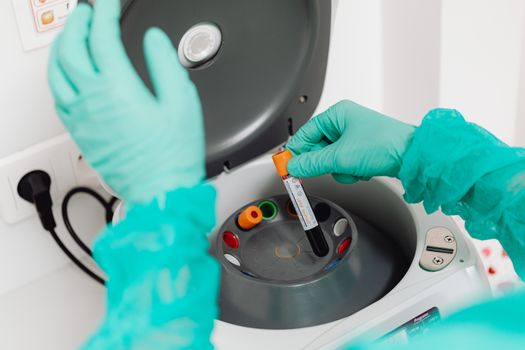
Last Tuesday, a study published in the Journal of the American Medical Association (JAMA) sent shockwaves through the medical community. Researchers at the University of Gothenburg in Sweden announced a blood test that can detect Alzheimer's disease with 90% accuracy—up to 10 years before symptoms appear.
I've been following Alzheimer's research for years. My grandmother had it. I've watched the slow, heartbreaking decline. So when I saw this headline, I felt a mix of hope and skepticism. We've heard promises before. But this one feels different.
I called up Dr. Henrik Zetterberg, one of the lead researchers on the study. He was gracious enough to talk to me for 20 minutes between lab sessions. Here's what he told me, and what it actually means for you and your family.
How the Test Works
The test measures levels of a protein called p-tau217 in the blood. Tau proteins are normally found in brain cells, but when they start to misfold and clump together—a hallmark of Alzheimer's—they leak into the bloodstream. The specific form, p-tau217, is highly correlated with the disease.
Past studies have looked at tau in spinal fluid, which requires a lumbar puncture. That's painful and invasive. A blood test is simple—just a standard draw. 'The difference is like night and day,' Dr. Zetterberg told me. 'We can now screen large populations without the barriers of cost or discomfort.'
The study involved 2,800 participants across three continents. The test correctly identified Alzheimer's pathology in 90% of cases, compared to about 60% for standard cognitive tests. That's a massive leap.
Why Early Detection Matters
You might be thinking: 'What's the point of knowing early if there's no cure?' It's a fair question. And honestly, I grappled with it too.
But here's the thing: we do have treatments now that slow the progression of Alzheimer's. Drugs like lecanemab and donanemab are approved in the US and Europe. They work best when started early—before significant brain damage has occurred. If you wait until symptoms appear, it's often too late.
'Think of it like cholesterol,' Dr. Zetterberg explained. 'You don't wait for a heart attack to check your cholesterol. You test early, and if it's high, you take steps to lower it. Alzheimer's is similar. The earlier we intervene, the better the outcomes.'
There's also the practical benefit of planning. Families can make decisions about care, finances, and living arrangements while the person is still capable of participating in those conversations. That's huge.
The Caveats Nobody's Talking About
I'm a natural skeptic, so I pushed Dr. Zetterberg on the limitations. He was refreshingly honest.