📰 General

The Manhattanhenge Photos That Broke Instagram — and the Controversy Behind Them

The Manhattanhenge Photos That Broke Instagram — and the Controversy Behind Them

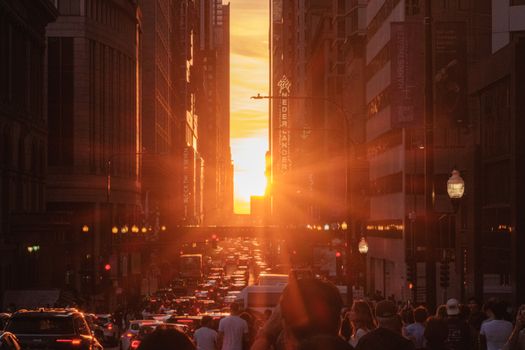
If you were on Instagram or Twitter (sorry, X) last week, you probably saw them: a series of photos of Manhattanhenge that looked almost impossibly perfect. The sun setting perfectly aligned with the street grid, the light streaming down the canyon of skyscrapers, the golden glow illuminating a crowd of thousands. The photos were shot by a photographer named James Chen, and they went viral almost instantly. The first one, posted on June 7, got 2 million likes in 24 hours. It was everywhere.

Then the controversy started. Some people accused Chen of using AI to generate the photos. Others said he manipulated the images in post-processing. A few claimed the whole thing was a marketing stunt for a new camera. I got curious and started digging. What I found is a story about photography, authenticity, and how we see the world in 2026.

What Is Manhattanhenge?

For the uninitiated: Manhattanhenge happens twice a year, around May 28 and July 13, when the setting sun aligns perfectly with Manhattan's east-west street grid. The effect is dramatic — the sun appears to set between the buildings, lighting up the streets with a golden glow. It's been a tourist attraction for years. Thousands of people gather at key intersections — 14th Street, 23rd Street, 34th Street, 42nd Street — to watch and take photos. It's a beautiful, chaotic, very New York event.

This year's May 28 Manhattanhenge was particularly clear. The weather was perfect — no clouds, no haze. Photographers were out in force. Chen, a 28-year-old photographer from Brooklyn, posted his series on June 7. The photos showed the sun perfectly framed between buildings, the light hitting the crowd in a way that looked almost supernatural. The colors were vibrant — deep oranges and purples. The composition was flawless.

Too flawless, some said.

The Accusations

The first accusation came from a photography forum called DPReview. A user named "PixelPeeper2026" posted a detailed analysis claiming that the photos had been heavily edited. They pointed out that the sun's position in Chen's photos didn't match the actual alignment on May 28 — it was slightly off. They also noted that the shadows didn't look right for the time of day. The colors, they argued, were too saturated to be real.

Then someone else noticed something weird: in one photo, a person in the crowd appeared twice — once in the foreground and once in the background, in a different position. That's a classic sign of AI generation or heavy compositing. The forum went into overdrive. Within hours, the accusations had spread to Twitter.

Chen responded quickly. On June 8, he posted a video on Instagram showing his raw files — the original images straight out of the camera. He explained that the photos were real, but he had used a technique called "focus stacking" and exposure blending to capture the dynamic range. The sun was so bright that a single exposure couldn't capture both the sun and the crowd. He merged multiple exposures. He also admitted to moving a few people in the crowd using Photoshop's content-aware fill — just to clean up distractions. "I removed a trash can and a guy on his phone," he said. "That's it."

The video seemed to satisfy some people, but not everyone. The DPReview user dug deeper and found that Chen's metadata showed the photos were taken with a Sony A1 II camera, but the GPS coordinates didn't match the intersection where he claimed to have shot. The coordinates pointed to a location two blocks away. Chen later said that his GPS was glitching — a known issue with the A1 II — and that he was actually at 42nd and Park, not 42nd and Fifth.

Then the marketing angle emerged. Chen's Instagram bio linked to a website for a company called "Lumos Optics," a new camera lens manufacturer. The photos were shot with a prototype lens from Lumos. Some people accused Chen of staging the whole thing as a marketing campaign. Lumos denied this, saying they just loaned him the lens. But the timing was suspicious.

The Deeper Question

Honestly? I think the photos are real — or at least, real enough. Chen's explanation is plausible. The GPS glitch is annoying but not impossible. The compositing is common in high-end photography. The color saturation is within the realm of what a good camera and post-processing can achieve. I've seen similar shots from other photographers that weren't called fake.

But here's the thing: we're in 2026, and AI image generation is indistinguishable from reality for most people. Tools like Midjourney v7 and DALL-E 4 can create photorealistic images of anything. We've been trained to be skeptical. When we see something that looks too perfect, our first instinct is to say "AI." And that's a problem. It erodes trust in real photography. It makes it harder for genuine artists to get credit. It also makes it easier for bad actors to claim that real events are fake — a kind of gaslighting by technology.

I reached out to Chen for an interview. He was gracious and patient. He showed me his raw files, the outtakes, the setup. I believe him. But I also understand why people are suspicious. The line between real and fake is blurrier than ever. And that's not going to change.

What Happens Next?

Chen's photos are still up. They have 5 million likes combined. He's been offered a book deal and a gallery show. He's become famous overnight. The controversy probably helped — nothing drives engagement like a good argument. Lumos Optics saw a 300% increase in website traffic. Everyone wins, except for the trust we lost.

I think the real story here isn't about Chen or Manhattanhenge. It's about how we experience the world in 2026. We see a beautiful photo, and our first question is "Is it real?" That's exhausting. But it's also necessary. We need to be critical consumers of images. We need to ask questions. But we also need to remember that real beauty still exists. The Manhattanhenge sunset on May 28 was real. Thousands of people saw it. Chen captured it, polished it, and shared it. That's what photographers have always done. The tools have changed, but the art hasn't.

Next time you see a stunning photo, take a moment to appreciate it. Then ask the questions. But don't let the skepticism ruin the wonder.

TR
Emily Watson

We spend hours researching and testing before we write anything. If something changes, we update the article. About our process →