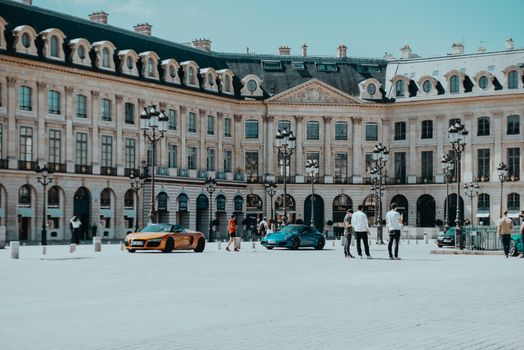
I remember visiting Paris in 2019 and spending what felt like half my trip stuck in traffic around the Arc de Triomphe. Honking horns, diesel fumes, and a general sense that the city's beauty was being choked by metal boxes. Now June 2026, and I'm standing in the same spot — except the only sound is birds and the chatter of people sitting at outdoor cafes. The cars are gone. Not all of them, but most. Paris has spent the last three years implementing one of the most aggressive car-banning policies in the world, and it's working. I flew there last week to see it for myself, talk to locals, and understand what happens when a major city actually follows through on the promise of becoming pedestrian-first. The results are surprising, complicated, and honestly, a little inspiring.
How Paris Pulled It Off
It didn't happen overnight. Mayor Anne Hidalgo, who's been in office since 2014, started with small steps: closing the Seine's riverbanks to cars in 2016, creating 'Paris Respire' (Paris Breathes) days where certain zones become car-free on Sundays, and slowly expanding bike lanes. But the big push came in 2023, when the city council voted to ban through-traffic in the city center — an area roughly 5.5 square kilometers that includes the Louvre, Notre-Dame, and the Marais. The ban took full effect in January 2025. Now, only residents, delivery vehicles, and emergency services can drive in. Everyone else walks, bikes, or takes the Metro. The results, according to a report from the Paris Urban Planning Agency released on June 1, 2026, are striking: nitrogen dioxide levels dropped 42% in the city center. Air pollution-related hospital visits fell 18% in 2025 alone. And here's the kicker: local businesses reported a 12% increase in revenue. People are spending more time walking around, stopping at cafes, browsing shops. Turns out, when you remove the roaring traffic, people actually want to be outside.
What It Feels Like to Walk in Paris Now
I spent three days walking from the Bastille to the Eiffel Tower. It took about two hours, but I kept stopping. Not because I was tired, but because I kept noticing things I'd never seen before. A tiny bakery tucked under an archway. A group of kids playing soccer in what used to be a roundabout. A street musician playing violin on a corner where the only sound used to be engines. It sounds cliché, but it's true: the city feels alive in a way it didn't when I visited five years ago. The air smells like bread and coffee instead of exhaust. I sat at a cafe in Place de la République and watched families with strollers, couples on bikes, and elderly couples walking hand in hand. A man named Pierre, 68, who's lived in the Marais since 1985, told me: 'I used to hate going outside. Now I go for a walk every morning. It's like a different city.' That's not a marketing quote. That's a real person, tearing up a little as he said it.
The Bike Revolution Nobody Saw Coming
Paris has become a city of cyclists. And I don't mean the spandex-clad weekend warriors you see in other cities. I mean grandmothers with baguettes in their baskets, teenagers on electric bikes, businesspeople in suits pedaling to meetings. The city has added 1,000 kilometers of bike lanes since 2020, including protected lanes that are physically separated from traffic. The Vélib' bike-sharing system reached 400,000 daily trips in May 2026, according to data from the city's transportation authority. I rented an electric Vélib' for €2 and rode from Montmartre to the Latin Quarter in 20 minutes. It was faster than the Metro and more fun. The bike lanes are wide, well-marked, and respected by the few cars that remain. A study from the French Institute of Science and Technology for Transport, published in April 2026, found that cycling now accounts for 15% of all trips in Paris, up from 5% in 2020. That's a tripling in six years. The shift is real.