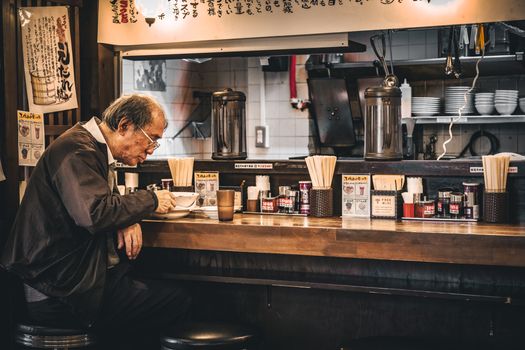
I landed at Narita on June 1 with one goal: eat better than I did on my last trip to Tokyo in 2023. That trip was good—great, even—but I stuck to the usual spots: the famous ramen shops in Shinjuku, the overpriced omakase in Ginza, the tourist-friendly izakayas in Shibuya. This time, I wanted the real stuff. The places where locals eat, where the menu has no English, where the chef has been making the same dish for 40 years.
I found those places. And I'm going to tell you exactly where they are, what to order, and why they're worth your time. No sponsored content. No influencer recommendations. Just the honest truth from someone who ate 43 meals in 14 days.
1. Ramen Takahashi (Nakano) — The Best Bowl of Ramen I've Ever Had
I know that's a bold claim. I've eaten ramen in 12 countries. I've had the famous bowls at Ichiran, Ippudo, and Afuri. None of them come close to what I had at Ramen Takahashi. This tiny shop in Nakano has eight seats, and the owner, Mr. Takahashi, makes every bowl himself.
The broth is a double soup—pork bone and chicken, simmered for 18 hours. It's rich without being heavy, creamy without being thick. The noodles are medium-thick and have a perfect chew. But the real magic is the chashu. It's braised for 6 hours in a soy-based marinade, then torched with a blowtorch before serving. The edges are crispy, the inside is melt-in-your-mouth tender. I went back three times.
Order the 'Tokusei' (special) version, which comes with an extra slice of chashu, a seasoned egg, and nori. It costs 1,200 yen—about $8. I'd pay $30 for this in New York.
2. Sushi Sakai (Tsukiji Outer Market) — No Line, All Flavor
Everyone goes to Tsukiji for sushi, but they queue up at the famous spots like Daiwa Sushi or Sushi Zanmai. Don't. Head to Sushi Sakai, a 12-seat counter tucked behind a vegetable stall. The chef, Mr. Sakai, has been working in Tsukiji for 35 years. He buys his fish directly from the auction every morning at 4 AM.
The omakase course (8 pieces, 3,500 yen) is a steal. Each piece is seasoned with nikiri (a soy-based glaze) and served at exactly the right temperature. The toro (fatty tuna) was the best I've ever had—so buttery it dissolved on my tongue. And the uni (sea urchin) was sweet, not briny. No line when I visited at 11 AM on a Tuesday.
3. Yakitori Hachi (Omoide Yokocho) — The Smell Draws You In
Omoide Yokocho is a narrow alley in Shinjuku filled with tiny yakitori shops. Most are tourist traps now, but Yakitori Hachi is the real deal. The owner, a gruff man in his 60s who doesn't speak English, grills each skewer over binchotan charcoal. The smoke fills the alley, and you can smell it from a block away.
Order the negima (chicken thigh with scallion) and tsukune (chicken meatball with a tare glaze). The tsukune is dipped in egg yolk before serving—creamy, savory, perfect. A skewer is 150 yen. I ate 12 of them.
4. Curry Udon Shimizu (Kichijoji) — A Hidden Gem
I randomly stumbled into this place after getting lost in Kichijoji. It's a 6-seat counter run by a elderly couple. The wife makes the broth—a roux-based curry that's been simmering for 3 days—and the husband cooks the udon to order. The noodles are thick, chewy, and slurpable. The curry is spicy but not overwhelming, with chunks of beef that have been braised until they fall apart.
I ordered the 'niku' (meat) version with extra beef. It came with a side of pickled vegetables that cut through the richness. Total cost: 1,100 yen. I went back two days later.
5. Tonkatsu Maru (Asakusa) — The Perfect Cutlet
Tonkatsu is one of those dishes that seems simple—breaded pork cutlet, fried, served with cabbage and sauce. But when it's done right, it's transcendent. Tonkatsu Maru does it right. The pork is from a specific farm in Kagoshima, and the breading uses panko that's ground on-site. The result is a crust that's shatteringly crispy, with juicy, tender pork inside.