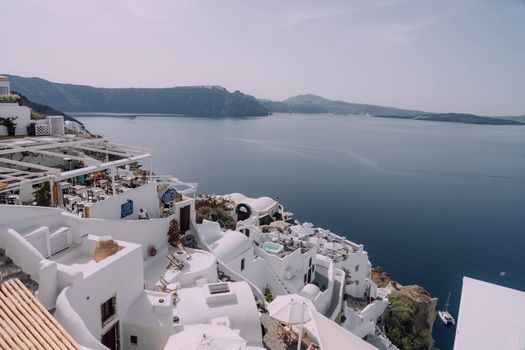
I have a confession to make. For years, I was a Santorini truther. I'd see those Instagram photos — the whitewashed buildings, the impossibly blue domes, the sunsets that look like God's personal screensaver — and I'd roll my eyes. 'It's a tourist trap,' I'd say. 'Overpriced. Overcrowded. The photos are better than the reality.'
I was wrong. Partially.
I just got back from a month-long trip through the Greek islands — my first time visiting since before the pandemic — and I wanted to give you the real scoop. Not the travel blogger version where every moment is magical and every meal is life-changing. The real version. The one where I spent 12 euros on a beer that tasted like regret, and the one where I found a beach so perfect I cried a little.
This is for anyone planning a trip to Greece in 2026. Because the islands have changed. Some for the better, some for the worse. And if you're going to spend your hard-earned money on a vacation, you deserve to know the truth.
The Case for Santorini (Yes, It's Worth It)
Let me start with the bad news: Santorini is absurdly crowded in peak season. I was there in late May, which is technically shoulder season, and Fira was still a river of selfie sticks. The famous sunset viewpoint in Oia? You'll be standing shoulder-to-shoulder with a hundred other people, all holding their phones up like they're praying. It's not romantic. It's a cattle call.
But here's the thing that nobody tells you: the reason those photos are everywhere is that the island is genuinely that beautiful. The caldera — the massive volcanic crater that forms the center of the island — is one of the most dramatic landscapes I've ever seen. The way the light hits the white buildings at golden hour makes them look like they're glowing from within. I'm not an emotional person, but I stood on a balcony in Imerovigli and just stared for twenty minutes. My girlfriend had to tap me on the shoulder to get me to move.
The food is also better than I expected. You'll hear people say that Santorini is a culinary destination, and for once, the hype is justified. The tomatoes here are unlike anything you've tasted — they're small, intensely sweet, and grown in the volcanic soil that gives them a mineral quality. The fava (split pea puree) is creamy and addictive. And the wine? Santorini is one of the few places in the world where Assyrtiko grapes thrive, producing a crisp, mineral-driven white wine that pairs perfectly with seafood. I did a wine tasting at the Artemis Karamolegos winery and learned more about volcanic terroir than I ever expected.
The secret to enjoying Santorini is simple: don't stay in Oia or Fira. Those are the tourist hubs, and they'll drain your wallet and your patience. Instead, stay in Imerovigli or Pyrgos. Imerovigli has the same caldera views as Oia but costs half as much and has a fraction of the crowds. Pyrgos is a hilltop village with winding streets and a medieval castle — it feels like the real Santorini, before the Instagram hordes discovered it. We found a family-run taverna there called Selene that served a lamb dish so tender it fell apart at the touch of a fork. The owner poured us a glass of raki and told us about his grandfather who built the restaurant in 1920. That's the Santorini you want.
Mykonos: The Island That Loves Itself Too Much
If Santorini is a supermodel who knows she's beautiful but occasionally lets her guard down, Mykonos is an influencer who's never met a filter she didn't like. It's polished, it's expensive, and it's exhausting.
Let me be fair: Mykonos has some genuinely gorgeous beaches. Paradise Beach and Super Paradise Beach are famous for a reason — the water is turquoise, the sand is soft, and the beach clubs are world-class. We spent an afternoon at Scorpios, and I have to admit, the vibe was immaculate. The DJ was good, the cocktails were strong, and the crowd was attractive in that curated way that makes you feel like you're in a music video.