✈️ Travel

Inside the 'Santorini Tourist Cap' Debate — I Went There Last Week and Here's What It's Really Like

Inside the 'Santorini Tourist Cap' Debate — I Went There Last Week and Here's What It's Really Like

Last Wednesday, the Greek government announced a cap on cruise ship passengers visiting Santorini — 8,000 per day starting in 2027. The headlines made it sound like the island was drowning in tourists. So I booked a last-minute flight to see for myself. I landed on Friday and spent three days walking the streets, talking to locals, and fighting through the crowds at sunset.

The short answer: yes, it's crowded. But the long answer is more complicated, and honestly, a lot of the coverage has missed the point.

The Numbers Don't Lie

In 2025, Santorini welcomed 3.4 million visitors. That's roughly 9,300 people per day on average, but the real problem is the cruise ships. On peak days — typically Wednesdays and Fridays — up to 18,000 cruise passengers disembark at the same time. The island's permanent population is just 15,000. Do the math.

I experienced this firsthand on Saturday. Four cruise ships were docked at Athinios port. The queue for the cable car up to Fira was over an hour long. Donkeys carrying tourists up the 600-step path were struggling in the heat. It felt less like a vacation and more like a theme park.

The Places Where You Can Escape the Crowds

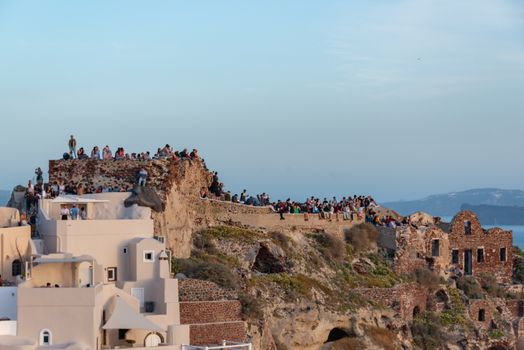
Here's the thing: Santorini is bigger than most people realize. The famous sunset views from Oia are absolutely packed — I saw people elbowing each other for a spot on the castle ruins at 7 PM. But if you walk 15 minutes north of Oia to Ammoudi Bay, you'll find a quieter fishing village with tavernas serving octopus caught that morning.

Similarly, the black sand beaches on the south coast — like Perissa and Kamari — are much less crowded than the caldera-side towns. I spent Sunday afternoon at Perissa, and while it wasn't empty, I could actually find a sunbed without booking in advance.

What Locals Think About the Cap

I spoke to Maria, who runs a small hotel in Imerovigli. She told me: 'The cruise ships bring money, but they don't stay. They spend four hours, take photos, eat a gyro, and leave. The shops in Fira have become souvenir stalls. The real Santorini is disappearing.'

Not everyone agrees. A taxi driver named Dimitris said the cap would hurt his business. 'If I can't take cruise passengers to the wineries, I lose 30% of my income.' The truth is, tourism is the island's only industry. Balancing preservation with livelihoods is hard.

Is It Still Worth Visiting?

Honestly? Yes, but with caveats. If you want the Instagram-perfect Santorini of whitewashed buildings and blue domes, you'll get it — but you'll share it with thousands of others. If you're willing to wake up early and explore the less-visited parts of the island, you'll find the magic that made people fall in love with it in the first place.

I recommend staying at least three nights and renting an ATV to explore the countryside. The village of Pyrgos, with its Venetian castle and winding alleys, felt like a time capsule. I had lunch at a family-run taverna where the owner's grandmother made the tzatziki from scratch. That's the Santorini I'll remember.

What the Cap Will Actually Change

Starting in 2027, cruise companies will have to book slots to dock in Santorini, and the total daily passenger limit is 8,000. That's still a lot of people, but it's less than half of what you'd see on a peak day now. The government is also investing in a new port that will handle arrivals more efficiently.

Will it fix everything? No. Santorini's infrastructure — water, waste, electricity — is already strained. But it's a start. Other destinations like Dubrovnik and Barcelona have similar caps, and they've helped reduce the worst of the crowds.

My Advice If You're Planning a Trip

Go before the cap takes effect — or after. The cap might actually make things worse in the short term because people will rush to visit before it changes. But in the long run, Santorini will be better off. Fewer tourists means more space for those who truly appreciate the island's beauty.

And please, don't ride the donkeys. They deserve better.

TR
Joshua Reed

We spend hours researching and testing before we write anything. If something changes, we update the article. About our process →