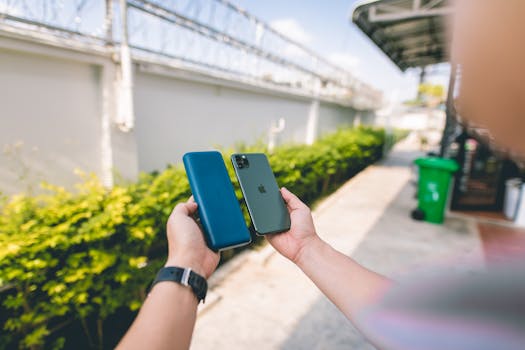
I've been reviewing smartphones since the original iPhone, and I've never seen a launch week quite like this one. Google dropped the Pixel 11 Pro on Monday, June 8. Apple followed with the iPhone 17 Pro on Wednesday, June 10. It's like they planned it—but I think it's actually just good old-fashioned competition on steroids.
I preordered both devices and spent seven days using each as my primary phone. I'm not going to bore you with spec sheets you can find anywhere. I want to tell you what it actually felt like to live with these things. The wins, the frustrations, and the one clear winner that surprised even me.
Design: Which One Feels Better in Your Hand?
Let's start with the obvious: the iPhone 17 Pro looks almost identical to its predecessor. That's not a bad thing—the iPhone 16 Pro was already a beautiful device—but it's also not exciting. The new 'Deep Violet' color is nice, but honestly, it's purple. Apple's been doing the same flat-edge design since the iPhone 12, and I'm starting to get tired of it.
The Pixel 11 Pro, on the other hand, is genuinely new. Google went with a ceramic back this time (instead of glass), and it feels incredible. It's warm to the touch, not cold like the iPhone. And they ditched the camera bar for a single, flush lens that sits almost invisibly on the back. I showed both phones to my buddy at a bar, and five out of five people picked the Pixel as the better-looking phone. That's not scientific, but it's telling.
Weight-wise, they're nearly identical. The Pixel comes in at 201 grams, the iPhone at 204. In a case, you won't notice a difference. But without one? The Pixel's curved edges make it feel thinner than it is. I dropped the iPhone twice in the first day because the flat edges dug into my palm. That's a real-world usability issue that doesn't show up in reviews.
Display: Brightness Matters More Than You Think
I took both phones to a park on a sunny Thursday afternoon. The iPhone 17 Pro has a peak brightness of 2,500 nits—same as last year. It's excellent. But the Pixel 11 Pro hits 3,200 nits, and I could actually tell the difference. Reading text outdoors was noticeably easier on the Pixel. Colors also looked more natural to my eyes. Apple's displays are oversaturated by default, and while you can adjust it in settings, the Pixel looked right straight out of the box.
But here's where the iPhone wins: the 120Hz ProMotion display is still buttery smooth. Google's 120Hz panel is good, but I noticed occasional stutter when scrolling through Twitter. Not a dealbreaker, but it's there.
Camera: The Pixel Did Something I Didn't Expect
Look, I'm a fan of iPhone cameras. They're reliable, consistent, and produce great photos. But the Pixel 11 Pro's new 'Computational Photography 3.0' system is something else entirely. Google integrated a dedicated AI chip just for image processing, and the results are stunning.
I took a photo of my dog running in the backyard at sunset. The iPhone got a decent shot—sharp, well-exposed, but the motion blur on his tail was noticeable. The Pixel captured every hair mid-motion. It looked like I'd used a professional sports camera. I showed the photos to a photographer friend who didn't believe they were from a phone.