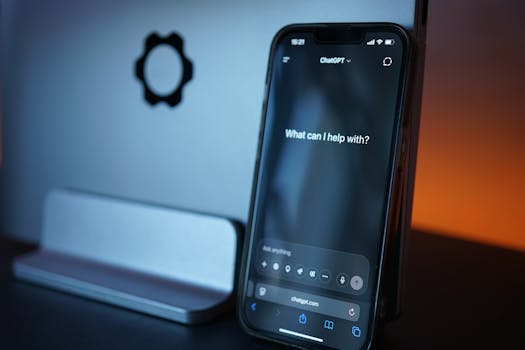
When Apple announced Apple Intelligence at WWDC 2024, I was skeptical. Every tech company was jumping on the AI bandwagon, and Apple's approach felt... careful. Deliberate. They weren't promising sentient chatbots or world-changing technology. They were promising small, practical improvements: smarter Siri, better photo editing, writing assistants. "AI for the rest of us," as one Apple executive put it. I rolled my eyes. But I also pre-ordered the iPhone 16 Pro Max that September, because I'm a sucker.
Fast forward to June 2026. I'm now using an iPhone 17 Pro (I upgraded in March), and Apple Intelligence has been out for over a year. Multiple updates have rolled out. New features have been added. Some have been removed. I've been using it daily for work, for personal stuff, for everything. And I have strong opinions. Some features are genuinely useful. Others feel like they were designed by a committee that doesn't use their own products. Here's my honest assessment.
Writing Tools — The MVP of Apple Intelligence
Let's start with the best feature: the Writing Tools. These are built into iOS, iPadOS, and macOS. You select text, and a menu pops up with options: Proofread, Rewrite, Summarize, Change Tone (Friendly, Professional, Concise), and now, in iOS 19, a new feature called "Explain Like I'm 5." I use these every single day. I write emails. I write articles. I write text messages. And the AI catches mistakes I miss. It suggests better phrasing. It summarizes long paragraphs into bullet points. It's not perfect — sometimes it changes my meaning, or suggests something that sounds like a corporate press release — but I'd say it saves me about 30 minutes of editing per day.
The "Change Tone" feature is particularly useful. I write a lot of emails to people I don't know well, and I tend to default to a casual tone. If I'm writing to a potential client or a source, I use the Professional option. It doesn't turn me into a robot — it just tightens up my language and removes the "uh"s and "like"s. The Friendly option is good for follow-ups with people I've already met. The Concise option is brutal — it cuts your text down to the absolute minimum. Sometimes it cuts too much. I wrote a thank-you note to a friend, used Concise, and it became "Thanks. You're welcome." Not great. But for business? Excellent.
The "Explain Like I'm 5" feature, new in iOS 19, is weirdly addictive. You give it a complex paragraph — say, a terms of service agreement — and it rewrites it in simple language. I used it on my internet provider's data cap policy. It told me: "You have 500 GB of data each month. If you use more, it will be slower. That's it." That's genuinely helpful. I wish every company had this built into their websites.
Photo Editing — Good, But Not Magic
Apple Intelligence includes a suite of photo editing tools. The headline feature is "Clean Up," which lets you remove objects from photos. It's Apple's version of Google's Magic Eraser. I tested it on a beach photo where a stranger was standing in the background. The results were impressive — it filled in the space with sand and water that looked natural. I couldn't tell it was edited. But when I tried it on a photo with complex backgrounds — like a city street with signs and people — it struggled. It left smudges. It duplicated textures in weird ways. It's good for simple removals, not for complex edits.
The "Memory Movie" feature is supposed to create a highlight reel from your photos based on a prompt. I typed "Summer 2025" and it created a video set to a Taylor Swift song (which I had to manually change because I don't listen to Taylor Swift). The video was okay — it showed beaches, sunsets, and group shots. But it included a photo of a parking lot for some reason. I don't know why. It also included a screenshot of a text conversation. The AI clearly doesn't understand context yet. Memory Movie is a party trick, not a tool I'd use regularly.
What I do use is the new "Portrait Mode" improvements. The iPhone 17's camera already takes excellent portraits. Apple Intelligence now automatically adjusts the depth map to fix edge detection — no more fuzzy hair. And the "Studio Light" effect looks like I have a professional lighting setup. For someone who takes headshots for work, this is a time-saver. I give it an 8/10.
Siri — Still the Weak Link
Let's talk about Siri. Apple promised a smarter Siri with Apple Intelligence. They said it would understand context, remember previous conversations, and handle complex requests. A year later, I'm still waiting. Siri can now process requests on-device for some tasks — setting timers, checking the weather — but it still struggles with anything beyond simple commands. I asked Siri, "What's the best Thai restaurant near me?" It opened Yelp and showed me a list. That's not AI. That's just opening an app. Google Assistant would have given me a recommendation with reviews and a star rating. Siri is years behind.